My Friend Asked ChatGPT to Find 100 Clients. A Week Later He Had 17 Sales Calls Booked. Here Are the 8 Prompts That Helped
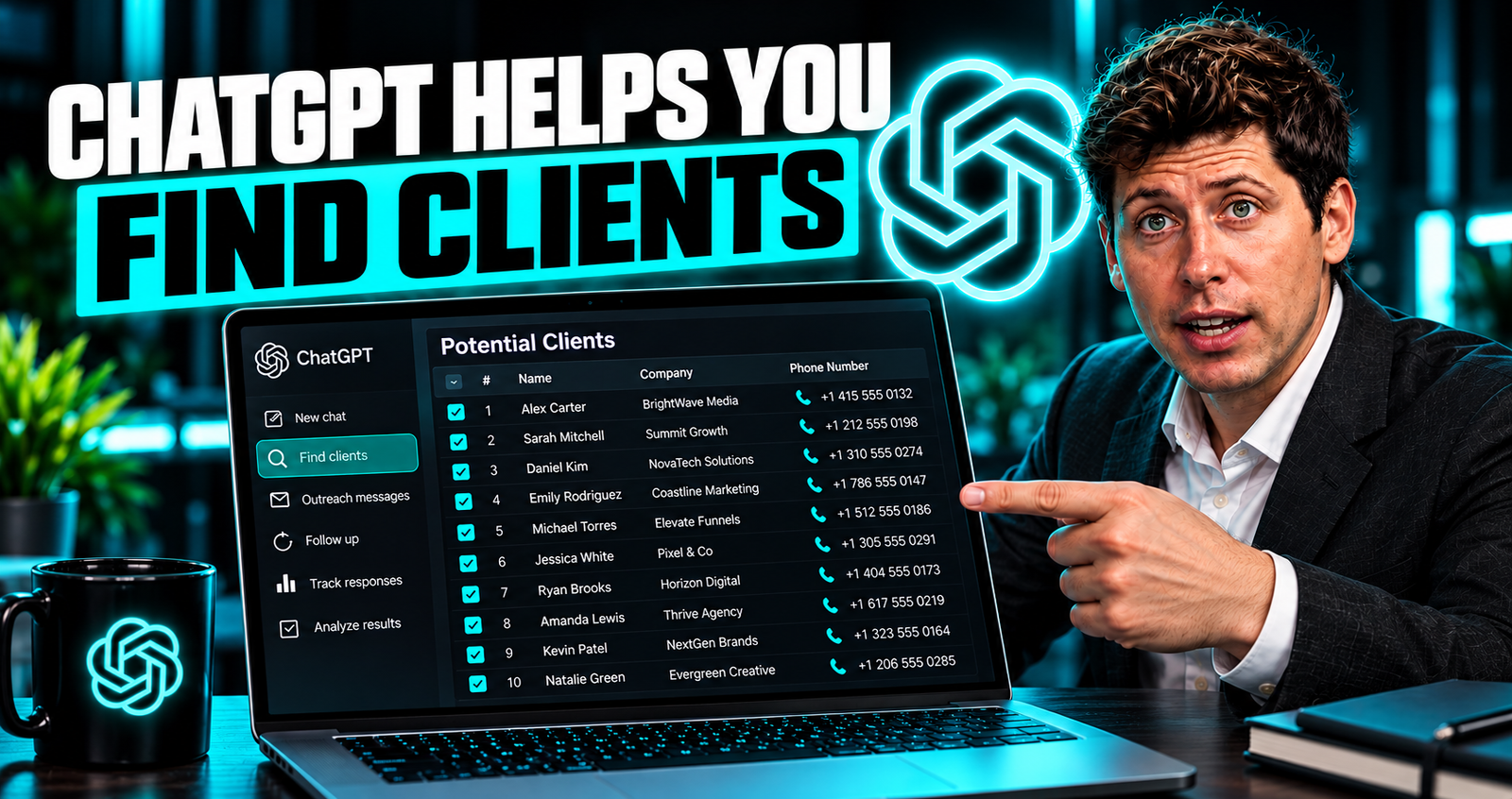
A friend of mine runs a small service business. He was tired of waiting for referrals, so he sat down with ChatGPT and asked it to help him find 100 potential clients. One week later, his calendar had 17 sales calls on it.
Before you get excited, a quick reality check. ChatGPT did not magically deliver 100 paying customers. What it did was speed up the slow, boring parts of prospecting: defining who to target, finding where they are, writing messages that sound human, and following up consistently. The work of reaching out and having the conversations was still his.
He shared the exact prompts he used, and I have cleaned them up so you can adapt them to your own business. Replace anything in [brackets] with your own details.
One friend's experience is a single data point, not a promise. Results depend on your offer, your market, and how consistently you follow through. Treat these prompts as a starting framework and test them.
Why this approach works
Most people ask AI something vague like "find me clients" and get a vague answer back. The difference here is sequence. Each prompt builds on the one before it, so by the time you write a single message, you already know exactly who you are talking to, what hurts, and what you are offering. Run them in the same chat so ChatGPT keeps the context.
The 8 prompts
Prompt 1
Define your ideal client
Start by getting specific. Narrow beats broad every time.
I run a [type of business] that helps [general audience] with [main result you deliver]. Based on this, create a detailed profile of my ideal client. Include industry, company size, role of the decision maker, typical budget range, and the situations that make them most likely to buy. Then suggest 3 narrower niches I could focus on first and explain which one is likely the easiest to win.
Prompt 2
Uncover their real problems
Good outreach speaks in the customer's language, not yours.
For the ideal client we just defined, list the 10 most common frustrations they have related to [your service area]. For each one, write how they would describe it in their own words (the way they would say it to a colleague, not marketing language), and what it costs them if they ignore it.
Prompt 3
Sharpen your offer
People do not buy "services". They buy a clear outcome.
Using the problems above, help me write one clear offer in this format: "I help [specific client] get [specific result] without [main objection or hassle]." Give me 5 versions. Then explain which one is strongest and why, and point out anything that sounds vague or exaggerated so I can fix it.
Prompt 4
Find where your clients actually are
Important: ask for places and search methods, not for a list of names. ChatGPT can invent contact details, so never trust a list of people it generates from memory.
Where can I find [ideal client type] online and offline? Give me specific places to look, such as directories, professional associations, LinkedIn search filters, Google Maps search terms, Facebook and LinkedIn groups, events, and job boards that signal a need. For each source, give me the exact search phrases or filters to use so I can build a list of 100 real prospects myself.
Prompt 5
Qualify your list
Not every name on your list deserves your time. This prompt helps you sort quickly.
Create a simple scoring checklist I can use to qualify each prospect in under 2 minutes. Include 6 to 8 yes or no questions based on public information (their website, social profiles, recent activity) that show whether they have the problem I solve, can afford my service, and are likely to respond. Then show me how to rank them into A, B and C priority groups.
Prompt 6
Write a first message that does not sound like a template
Paste in a few real details about each prospect and let ChatGPT personalize the draft. Always read and edit before sending.
Write a short first message (under 90 words) to a [role] at a [type of company]. Here is what I noticed about them: [one specific observation from their website or profile]. Open with that observation, mention one relevant problem I help with, and end with a low pressure question asking if it is worth a 15 minute chat. No buzzwords, no flattery, no fake urgency. Write 3 variations in different tones: friendly, direct, and curious.
Prompt 7
Build a follow-up sequence
Most replies come after the first message, not from it. A polite, useful follow-up is where a lot of booked calls come from.
Write a 3 step follow-up sequence for prospects who did not reply to my first message. Space them across 10 days. Each follow-up should add something new, such as a short tip, a relevant example, or a simple question, instead of just saying "checking in". Keep each one under 60 words and make the final one a friendly, no-pressure close.
Prompt 8
Prepare for the sales call
Once the calls start booking, preparation is what turns conversations into clients.
I have a sales call with [role] at [type of company] about [problem]. Create a call plan with: 5 discovery questions to understand their situation, the 5 objections I am most likely to hear (price, timing, trust, "we already have someone", "send me info") with honest, non-pushy responses, and a clear next step I can propose at the end of the call.
How to run this in practice
- Use one chat for prompts 1 to 3 so the context carries over, then start fresh chats for outreach batches.
- Build your prospect list yourself from real sources. Use AI for strategy and writing, not for inventing contacts.
- Send in small daily batches rather than blasting everyone at once. Consistency beats volume.
- Edit every message. If it reads like AI wrote it, rewrite the first line by hand.
- Track replies in a simple spreadsheet and ask ChatGPT to analyze what is working after your first 30 messages.
Keep it compliant. If you are contacting businesses in the EU, follow GDPR and local electronic marketing rules. Contact people in a professional context, be transparent about who you are, and always make it easy for them to opt out.
The bottom line
ChatGPT will not find clients for you. But it can compress days of planning and copywriting into an afternoon, which leaves you more time for the part that actually closes deals: talking to people. If you try this framework, start with one niche and one offer, send a small batch, and improve from the replies.
Disclaimer: This article is for educational purposes only. The experience described is one individual's case and is not a guarantee of results. Outcomes vary based on your business, market, effort and execution. AI tools can make mistakes, so always verify information and review all outreach before sending.