How to Make Money Clipping Videos With Opus Clip (No Audience Required)
There is a corner of the creator economy where you do not need followers, a personal brand, or years of posting to start earning. It is called clipping, and it works because big creators need short-form content faster than they can produce it themselves. Here is how the system actually works, and how to use AI to do the heavy lifting.
What Is a Clipping Campaign?
Clipping platforms like Vyro connect large creators and brands with everyday people willing to turn their long-form videos into short clips for TikTok, Instagram Reels, and YouTube Shorts. Creators post open campaigns describing what kind of clips they want. Anyone can join a campaign, cut clips from the source video, post them to their own social accounts, and submit the links back to the platform for tracking.
MrBeast was one of the first major creators to back this model through Vyro, and other big names like Mark Rober have followed. The pitch is simple: you do not need your own audience or history on the platform. You get paid based on how many views your clips generate, not how many subscribers you have.
How the payout actually works
Vyro pays around $3 for every 1,000 views a clip earns across the platforms you post to. That is meaningfully higher than YouTube’s Partner Program, which typically pays between $0.50 and $2 per 1,000 views, and far ahead of TikTok’s Creator Fund, which sits closer to $0.02 to $0.04 per 1,000 views. Payouts are processed frequently and can usually be withdrawn through PayPal, bank transfer, or crypto.
Reality check: the often-repeated claim of earning $3,000 a month from clipping is not automatic. It depends entirely on how many views your clips pull in, how many campaigns you work across, and how consistently you post. Treat it as a ceiling reached by active, consistent clippers, not a guaranteed outcome from a few uploads.
Why Clipping Beats Regular Short-Form Posting
| Platform |
Typical payout per 1,000 views |
| Vyro clipping campaigns |
~$3.00 |
| YouTube Partner Program |
$0.50 to $2.00 |
| TikTok Creator Fund |
$0.02 to $0.04 |
The gap exists because clipping campaigns are funded directly by the creator or brand who wants distribution, rather than relying on a platform’s ad-revenue pool. You are essentially getting paid for helping someone else’s content travel further, and you can join as many open campaigns as you want at the same time.
Where Opus Clip Fits In
The bottleneck in clipping is time. Manually scrubbing through a one-hour video to find the handful of moments worth cutting into a short clip is slow, and most clippers who succeed on these platforms are posting in volume, across multiple campaigns, every day.
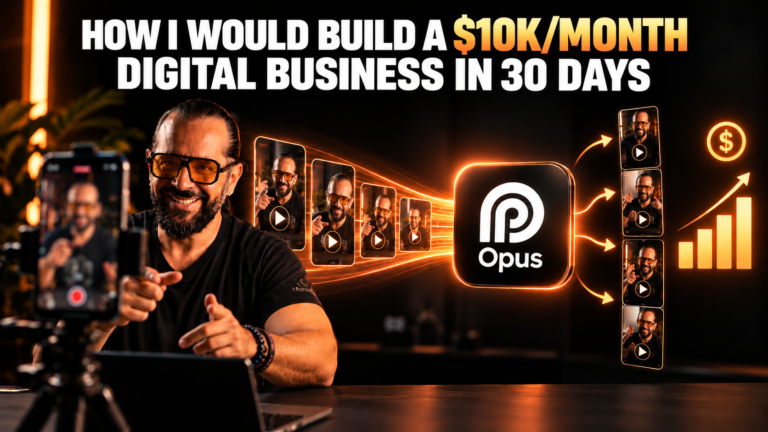
This is where Opus Clip comes in. You feed it a long-form video, and it automatically finds the strongest moments, generates dozens of short clips, writes titles for each one, and scores them by virality potential so you can immediately see which clips are worth posting first.
What you actually get from one video
- Dozens of ready-cut clips pulled from a single long-form video, often 40 or more from a full-length upload
- AI-generated titles for each clip, so you are not stuck writing captions from scratch
- A virality score per clip, ranking which moments are most likely to perform
- Editable clips, so you can trim further or record a reaction on top before posting
Step-by-Step: From Campaign to Posted Clip
- Create a profile on a clipping platform. Sign up on Vyro (or a similar clipping marketplace) and browse the open campaigns. Start with ones that are actively accepting clippers, like an open MrBeast campaign.
- Pick a campaign and grab the source video. Every campaign lists its requirements, so check what type of clips the creator wants before you start cutting.
- Run the video through Opus Clip. Upload or paste the video link, and let the AI break it down into a batch of short clips complete with titles and virality scores.
- Choose your best clips. Sort by virality score and pick the ones built around genuine peak moments, the parts of the video where something surprising, funny, or high-stakes happens.
- Edit if you want to stand out. Trim the clip further, adjust captions, or record a short reaction on top to make it feel more original.
- Download and post everywhere it is allowed. Upload the clip to TikTok, Instagram Reels, and YouTube Shorts, then submit the links back to the campaign for tracking.
- Repeat across multiple campaigns. The clippers who earn the most are rarely relying on a single video. Work several open campaigns at once and post consistently rather than in bursts.
Try Opus Clip and Start Cutting Clips →
A Few Things Worth Knowing Before You Start
- Read each campaign’s rules carefully. Some restrict which platforms you can post to or require specific formatting.
- Views, not follower count, drive your earnings, so posting consistently matters more than having a big account already.
- Quality still wins. A clip with a genuinely strong moment will outperform ten mediocre ones, even with AI doing the cutting.
- Income varies clip by clip and creator by creator. Use it as a way to learn short-form editing and earn while you’re at it, not as a guaranteed paycheck from day one.
Final Thought
Clipping campaigns remove the biggest barrier that stops most people from making short-form content: the need for an audience. Combine that with a tool like Opus Clip that turns one long video into a full batch of ready-to-post clips, and the actual workload comes down to picking good campaigns and staying consistent.
This article contains an affiliate link. If you sign up through it, we may earn a small commission at no extra cost to you.