Demis Hassabis Says AGI Is 4 Years Away — Here’s How to Not Get Left Behind
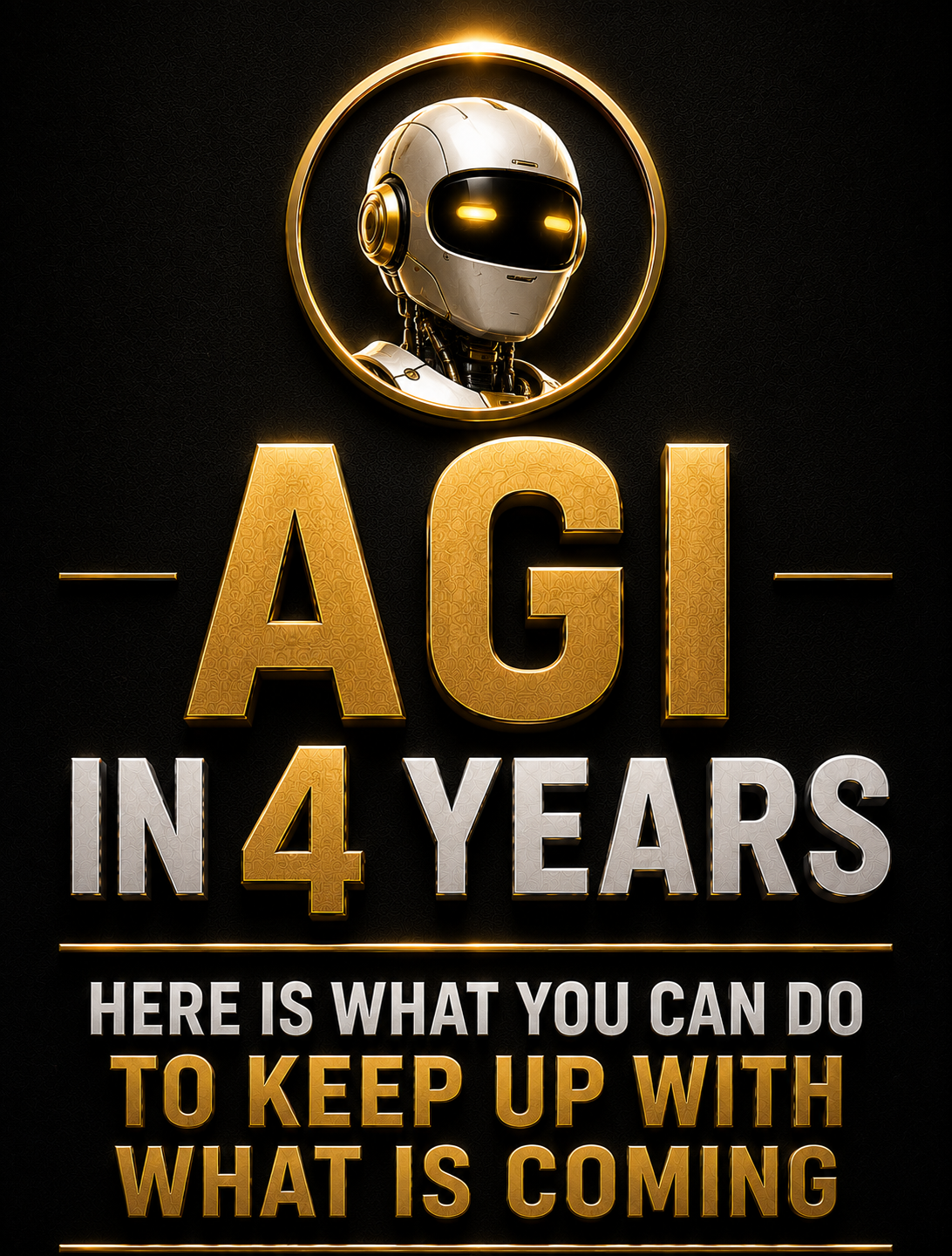
At Google I/O 2026, Google DeepMind CEO and Nobel laureate Demis Hassabis said something that’s been echoing across the AI world ever since: that we may be as close as 4 years away from artificial general intelligence (AGI) — AI that can match or exceed human ability across virtually any task. He described the moment as standing in the “foothills of the singularity.” In follow-up interviews with Axios and others, he pointed to fast-accelerating AI agents as a sign the industry may be on the right technical path — while still framing his broader estimate as somewhere around 2029-2030.
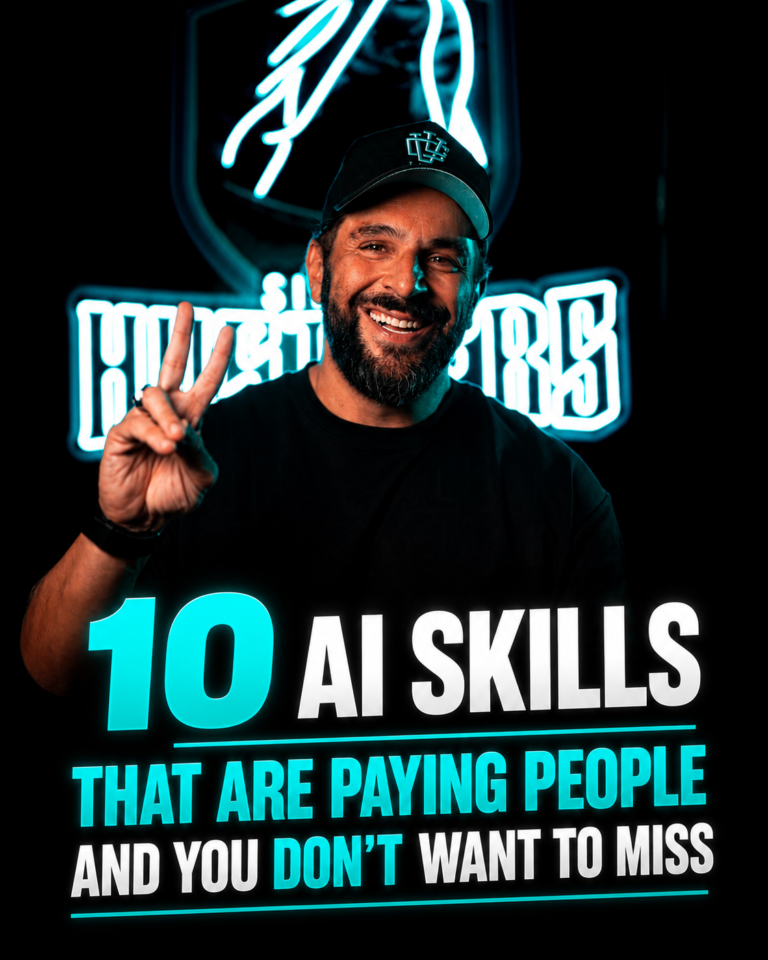
Whether it lands in 4 years or takes longer, one thing is clear: the people who prepare now will be in a completely different position than those who wait and see. Here are 10 ways to adapt and grow with AI instead of being replaced by it.
1. Become the AI Operator, Not the Bystander
Learn to direct AI tools inside your actual job — prompting, editing, verifying — so you’re running the workflow, not being automated out of it. The tasks most at risk are the ones AI can complete end-to-end without supervision.
2. Sharpen Judgment and Taste
AI can generate a hundred options fast. It can’t tell you which one is right for this client, this culture, this moment. Your ability to evaluate and choose is the scarce skill now — and it gets more valuable, not less, as AI gets smarter.
3. Learn Prompt Engineering as a Real Skill
Not just “how to ask ChatGPT things” — structured thinking: breaking problems into steps, specifying constraints, iterating on output. If AGI does arrive within a few years, the people fluent in directing AI systems will adapt fastest.
4. Specialize in What AI Can’t Fully Model
Deep, idiosyncratic expertise — legal nuance, medical judgment, local market knowledge, a specific craft — is much harder to replace than generalist knowledge work, even by a highly capable general system.
5. Own the Relationship, Not Just the Output
Clients and employers pay for trust and accountability. Someone still needs to be the human who says “I stand behind this” when things go wrong — no AGI timeline changes that.
6. Get Fast at Learning New Tools
Specific AI tools will keep changing, especially if the pace Hassabis describes is real. The future-proof skill is picking up a new tool’s logic quickly and discarding what doesn’t work.
7. Move Upstream: Design Systems, Not Just Tasks
Instead of doing every task yourself, build the workflow or pipeline that produces the work at scale. Systems-thinkers direct AI; task-doers compete with it directly.
8. Build a Reputation AI Can’t Impersonate
AI can mimic style, but it can’t replicate earned credibility or a genuine relationship with an audience. Audience trust and a recognizable voice are durable moats, AGI or not.
9. Use AI to Do More, Not to Do Less
The safest path isn’t “let AI handle it so I can slow down” — it’s “let AI multiply my output so I can take on more ambitious work than before.” If Hassabis is right about the timeline, ambition compounds faster now than ever.
10. Teach or Explain AI to Others
There’s a growing gap between what AI can do and what most people know how to use it for. Translating that capability into practical value for non-experts is itself a durable, in-demand skill — and it only gets more valuable as the technology accelerates.
Worth noting: Hassabis isn’t the only voice in this conversation, and not everyone agrees on the timeline. Some researchers put AGI a decade or more away, and definitions of “AGI” itself still vary widely across the industry. But even the more cautious voices agree the direction is the same — which is exactly why the 10 steps above matter regardless of the exact date.
Disclaimer: This content is for informational and educational purposes only and does not constitute career, financial, or legal advice.